


swLORETA Z Score Neurofeedback
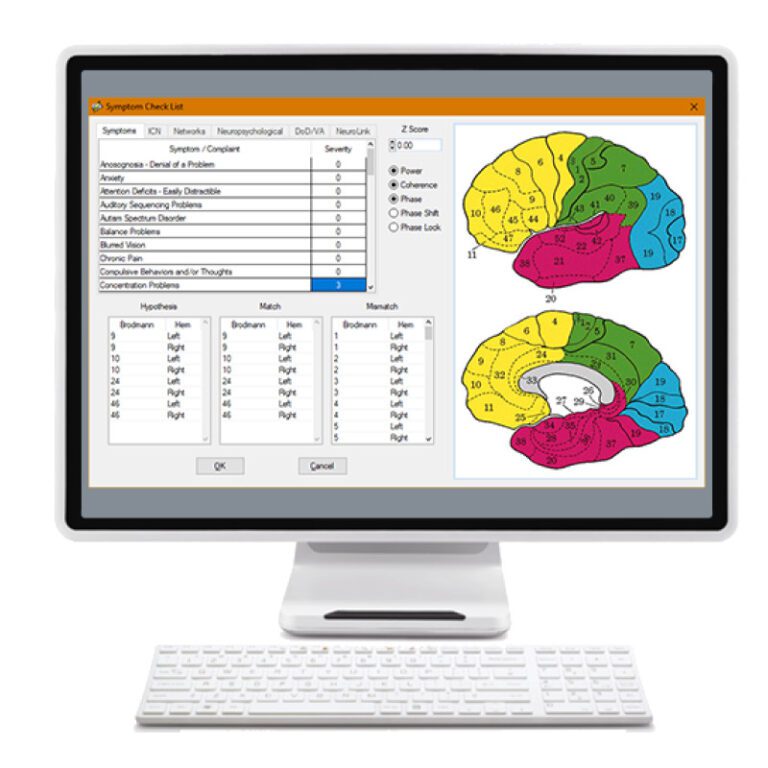
swLORETA Z Score Neurofeedback: Z Score swLORETA biofeedback of Brodmann areas in the brain, “Hubs”, “Modules” and “Default Mode Network” and 3-dimensional locations registered to a reference MRI. Includes ‘Live’ swLORETA Coherence & Phase Differences from 88 Brodmann Areas, plus the Thalamus, Vermis, Red Nucleus and the Cerebellum Regions of Interests. The neurofeedback protocol is based on a symptom checklist combined with swLORETA Z scores measured during a QEEG analysis to aid in linking patient’s symptoms and complaints to functional specialization in the brain. 3-Dimensional swLORETA Z Score Neurofeedback also requires purchasing the NeuroGuide™ Collection Module. * Neurofeedback is used for “relaxation training”.
List of Amplifiers that can be used with the swLORETA Z Score NFB Add-On:
- Advanced Brain Monitoring B-Alert X24 – We do not support models manufactured after 2013.
- ANT eegosport
- BIOSIGNAL microEEG
- BrainAmp MR (available for certain models – Contact Us)
- BrainMaster Discovery
- Cadwell Essentia
- CGX/Cognionics Quick-20, Quick-20r, Quick-20r v2, Quick-20m & CAMP
- Contec
- DeMeTec Data Box 30
- Deymed EEG 32ch
- Fistar
- Medicom
- Mitsar
- Neuroelectrics Enobio 20 & 30 ch, StarStim
- NeuroField Q20 & Q21
- Neuron-Spectrum 2, 3, 4, 4EP, 4P, 5, 5S
- NeuroPulse NP-Q 10/20
- NeuroSurve
- NeXus Q32 & 32 (now 32F)
- ScienceBeam eWave
- Wearable Sensing DSI-24 (For Research)
- Ybrain Mindd Scan 20
- Zeto WR19
NeuroNavigator
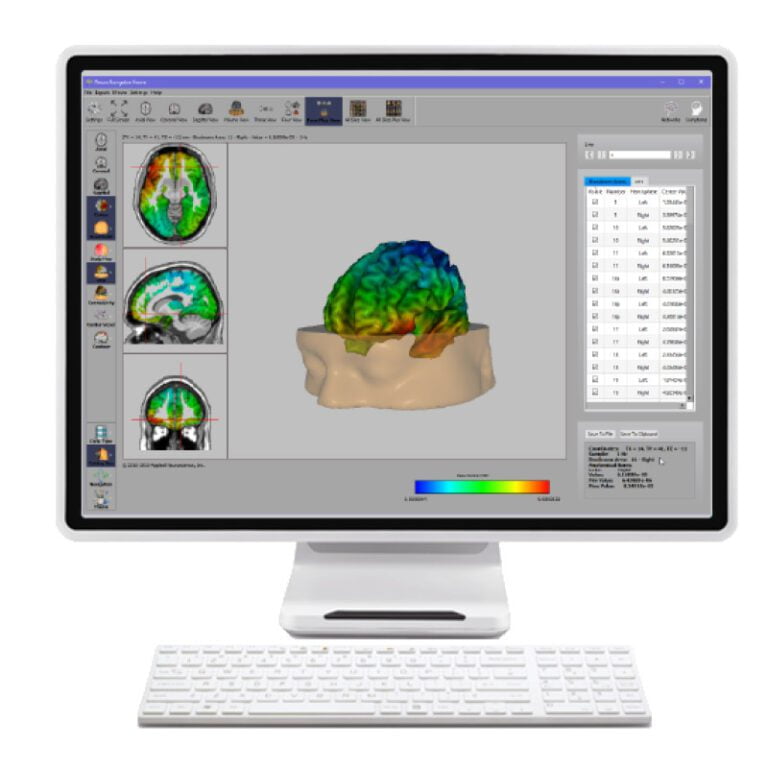
NeuroNavigator – A Powerful and Accurate 3-Dimensional NeuroImaging Add On to NeuroGuide
Basic NeuroNavigator Current Source Density (CSD) Raw Scores Only
Applied Neuroscience, Inc. New Generation of a Powerful swLORETA Navigator. The old 2001 Key Institute LORETA viewer is often not compatible with new Windows operating systems and new computer hardware. In response, ANI is proud to announce the development of the next generation of EEG Neuroimaging now available for purchase. NeuroNavigator with Raw Current Density (CSD) values must be purchased before you can purchase our NeuroNavigator add-on options (i.e., Z scores of CSD norms and Functional Connectivity (Coherence & Phase) and/or Effective Connectivity (Phase Slope Index) and/or Diffusion Tensor Imaging.
The NeuroNavigator is a new state of the art Electrical Neuroimaging tool that uses a real-MRI with 12,270 voxels and the Boundary Element Method (BEM) to compute the inverse solution. The BEM avoids the errors inherent in the use of a spherical head model and allows for accurate source localization at depths. In addition the NeuroNavigator uses swLORETA (weighted sLORETA) that adjusts for source space inhomogeneity and provides accurate estimates of source gradients from the upper cortical layers I – III to the lower cortical layers IV-VI.
This inexpensive and powerful swLORETA navigator provides increased accuracy and ease of use. The NeuroNavigator provides advanced tools to effortlessly explore the electrical activity of your patient’s brain and link symptoms to dysregulation in brain networks. The new state of the art swLORETA has 12,470 voxel while the Key Institute LORETA viewer has only 2,394 voxels and a low resolution average MRI. The ANI NeuroNavigator is the modern replacement that retains many of the old Key Institute viewer properties while at the same time supercharging the viewer to greatly improved resolution and the ability to image deep sources and not just surface sources like the Key Institute LORETA and sLORETA do. The sw prefix stands for standardized weighted LORETA that has the same zero localization error in low noise environments but adds a weighting to achieve depth source resolution (E. Palmero-Soler et al, Phys. Med. Bio.; 52;1783-1800, 2007). Test the new swLORETA navigator in the free NeuroGuide demo and see for yourself what the advanced 21st Century brain imager is capable of. To arrange for the 12 Month Payment Plan Contact the ANI Customer Support Team at: [email protected].
Minimum Computer Requirements
Due to the heavy demand on computer resources the recommended PC configuration is dual-core or more than one core and at least 6 Gigabytes of ram. NeuroGuide™ runs with all versions of Windows, however, Windows 10 is recommended.
In addition, the NeuroNavigator Add-ons require a high quality video card with at least 2 Gigabytes of memory and compatible with Open GL 3.3 or greater.

icSpeech Professional Edition
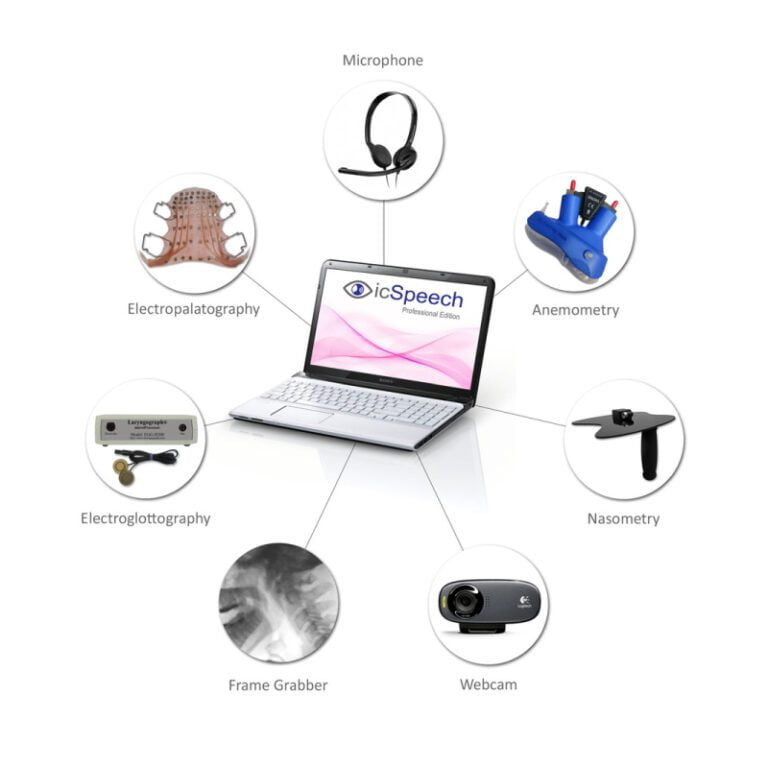
Multiparameter speech analysis software
icSpeech Professional Edition is multiparameter speech visualisation and analysis software. Its flexible plug & play architecture enables synchronised data capture from a wide range of speech instrumentation.
Features include:
- Multiparameter support for speech, voice, airflow, lingual and video
- Multiple displays including waveforms, palatograms, spectrograms and video
- Comprehensive data analysis and export features
- Data recorder featuring picture prompts, annotation and notes
- Six interactive games featuring targets and rewards
- Pronunciation tools featuring speech recognition and text to speech

Pronunciation Coach 3D
3D English pronunciation software
Without a good understanding of how to pronounce the individual sounds of a language, it can be difficult to speak words clearly. Pronunciation Coach 3D uses state-of-the-art computer animation and 3D modelling techniques to illustrate how to pronounce all of the sounds in the English language, and how to combine these sounds to pronounce any word or sentence.
Key features:
- Animated 3D model shows you how to pronounce any sound, word or sentence.
- Records your pronunciation and lets you compare it to an example.
- Scores your pronunciation using automated speech recognition.
- Contains a 40 lesson English pronunciation guide.

Pronunciation Coach
English pronunciation software
Without a good understanding of how to pronounce the individual sounds of a language, it can be difficult to speak words clearly. Pronunciation Coach is an easy-to-use tool that shows you how to pronounce all of the sounds in the English language, and how to combine these sounds to pronounce any word or sentence.
Key features:
- Shows you how to pronounce any sound, word or sentence.
- Records your speech and lets you compare it to an example.
- Provides instant feedback on your speech intelligibility.
- Contains a 21,000 word pronunciation dictionary.
- Contains a 40 lesson English pronunciation guide.

Audio-Visual Entrainment (AVE) and Cranio-Electro Stimulation (CES) DAVID DELIGHT PRO
The DAVID Delight Pro is an innovative, portable hand-held device that offers a non-pharmaceutical approach to wellness using Audio-Visual Entrainment (AVE) and Cranio-Electro Stimulation (CES). AVE and CES provide a non-invasive way to achieve peak mental and physical well-being. AVE and CES can be used together or separately
DAVID Delight Pro Explainer Video
Research shows that AVE can effectively and quickly dissociate, guide the brain into various brainwave states, increase neurotransmitter production, and increase cerebral blood flow. Research shows that CES is very effective at increasing cerebral blood flow and stimulates beneficial neurotransmitters: serotonin, endorphins, and norepinephrine.
The Delight Pro sessions are supported by the most current research studies in the areas of stress reduction, insomnia, improved mood, mental sharpness and balance (reduced risk of falling) in seniors, reduced worry, Seasonal Affective Disorder, and improvements in concentration and memory in college students. Along with academic, sports, and business performance optimization. The Delight Pro sessions also include our proprietary randomization process, which helps encourage dissociation and brain frequency tracking to the stimulus, to ensure you the best results.
The Delight Pro features 25 sessions (five sessions in each of the following categories plus 3 gamma sessions in the user-designed category - see further below):
Energize
Meditate
Brain Booster
Sleep
Feeling Better
The CES follows the frequency of the AVE session unless the popular 100 Hz CES is selected.
Audio-Visual Entrainment (AVE) is a technique that utilizes pulses of light and sound at specific frequencies to gently and safely guide the brain into various brain wave patterns. By altering your brain wave frequencies, you have the ability to boost your mood, improve sleep patterns, sharpen your mind, and increase your level of relaxation, all with the simple push of a button! AVE also increases brain health by increasing cerebral blood flow and stimulating beneficial neurotransmitters, such as serotonin, norepinephrine, and endorphins.
The gamma brainwave frequency band is defined as being approximately between 30 to 100 Hz, with 40 Hz being of particular significance, as 40 Hz appears to be the brain’s master clock frequency and other rhythms, especially theta, modulate into 40 Hz. gamma activity is largely a product of glial cell activity.
Gamma brainwaves help with attention, focus, binding of senses (smell, sight, and hearing), consciousness, mental processing, and perception. The visual system relies heavily on gamma brainwave activity. The ability to recognize novel objects against a background of similar objects is due to gamma activity. So, something as simple as driving a car would be difficult if it were not for gamma. It has been found that gamma activity increases in the brain area related to the task being performed.
Mismatches in gamma/theta modulation called thalamocortical dysrhythmia, are found to be associated with poor memory, tinnitus, and chronic pain.
AVE at gamma frequencies has been shown to dramatically reduce amyloid deposits in mice that have been genetically modified to develop Alzheimer’s disease. However, because the mice were transgenic, this doesn’t prove that gamma stimulation will work with humans with Alzheimer’s, but it is hopeful. Another study from Georgia Tech by Singer et al showed gamma AVE produced several beneficial types of cytokines in wild mice and these effects will likely apply to humans.
The gamma sessions are:
1 - SMR/gamma - cycles between 40 Hz and 12 to 15 Hz (SMR) every few minutes. Calms the body while boosting mental sharpness.
2 - Randomized 38 to 42 Hz – another approach/option using randomization.
3 - Fixed at 40 Hz – based on the study to boost cytokines.
Cranio-Electro Stimulation (CES) is a non-invasive brain stimulation that applies a small pulsed electric current across a person’s head. This small electrical stimulus which is applied laterally across the cranium stimulates endorphins, serotonin, and norepinephrine neurotransmitter production.
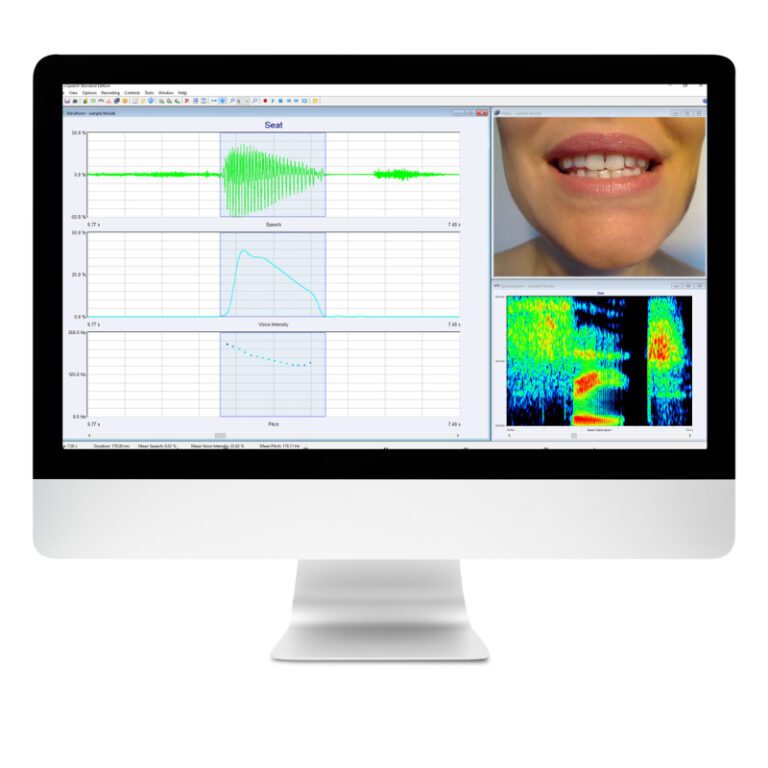

icSpeech Standard Edition
Speech visualisation and analysis software
icSpeech Standard Edition contains a comprehensive set of speech visualisation and analysis tools in one easy-to-use application that is compatible with most standard microphones and webcams.
Features include:
- Multiple displays including waveforms, bar charts, video and spectrograms
- Multiparameter support for speech, video, pitch and voice detection
- Comprehensive data analysis and export features
- Data recorder featuring picture prompts, annotation and notes
- Six interactive games featuring targets and rewards
- Pronunciation tools featuring speech recognition and text to speech

OASIS PRO
The Oasis Pro is an innovative, high-quality Cranio-Electro Stimulation (CES) device that applies a small pulsed electric current across the head. This small electrical stimulus which is applied laterally across the head promotes good mental health and wellness. The Oasis Pro may be used while you are sitting, lying down, or engaged in quiet, non-hazardous activities
Oasis Pro Explainer Video
The Oasis Pro uses a rounded pulse instead of a square wave which typically is used in CES stimulation. Unfortunately, square waves sting the ears or body part where the electrodes are attached. By rounding the leading edge of a pulse, over 80% of the sting is removed.
It has been shown that if the frequency of a CES session is randomized, the effect is significantly improved over that of a fixed frequency as randomization reduces habituation. The Oasis Pro offers two types of randomization: phase-shifted randomization and frequency randomization.
The Oasis Pro sessions stimulate within the brain wave range. This makes use of the entrainment effect.
Oasis Pro Session Frequency Range
• Microcurrent Electrical Therapy 0.5 - 3 Hz, short pulses
• Sub-Delta 0.5 - 3 Hz, 50% duty cycle pulses
• Delta 2.5 - 5 Hz
• Theta 6 - 8 Hz
• Alpha 9 - 11 Hz
• Beta 1 12 - 15 Hz
• Beta 2 18 - 22 Hz
• 100 Hz
Each session can be set for 20 minutes, 45 minutes, or three hours.
(gamma sessions below)
About Cranio-Electro Stimulation (CES)
Cranio-Electro Stimulation (CES) was developed in the Soviet Union in the late 1940s to help with sleep problems and has since been used by millions of people all over the world.
Over 200 studies to date have shown that CES increases the calming type of neurotransmitters within the brain, namely serotonin and endorphins. Clinical research over the past 50 years has shown that CES calms the mind, boosts relaxation, helps with sleep, and improves mental sharpness and ability in general. CES is particularly useful in producing calm in situations like being at the dentist, while writing exams or struggling with the fast pace of work or school. CES also settles body discomfort.
About Microcurrent Electro Therapy (MET)
Although electro-medicine has been in existence for well over a thousand years, developments in electronics and new research has seen this technology grow at a terrific rate in recent years. Microcurrent Electro Therapy (MET) is very different than traditional TENS because MET produces its benefits in part on a cellular level. MET has longer-lasting effects than TENS. The concept of MET is based, in part, on Arndt’s Law, which states that weak stimuli excite physiological activity, whereas medium-strength stimuli will encourage it and strong stimuli will suppress it. It is believed that MET delivered at around 500 micro-amps in the 0.5 to 3 Hz range may be most effective for treating aches and discomfort.
About Transcranial DC Stimulation (tDCS)
When a DC current is applied over the scalp with the intention of altering neuronal activity, it is known as transcranial DC stimulation. tDCS is effective in modulating spontaneous neuronal firing. tDCS at intensities of 1 milliamp applied for roughly 20 minutes has been shown to either excite or inhibit the sensorimotor cortex, with the effects lasting over an hour. Excitation is achieved by anodal (+) stimulation, while inhibition is achieved by cathodal (-) stimulation. Anodal stimulation has also been shown to increase both beta and gamma activity in the visual cortex, while cathodal stimulation has decreased beta and gamma activity. Stimulation is generated by putting a wet cloth, cotton ball, or sponge on the scalp over the brain region to be treated and a sponge or cotton ball on the shoulder or the face. The tDCS sessions deliver a maximum intensity of 2.2 milliamps at DC. tDCS is being used to help with many conditions, including improving mood.
The gamma brainwave frequency band is defined as being approximately between 30 to 100 Hz, with 40 Hz being of particular significance, as 40 Hz appears to be the brain’s master clock frequency and other rhythms, especially theta, modulate into 40 Hz. Gamma activity is largely a product of glia cell activity.
Gamma brainwaves help with attention, focus, binding of senses (smell, sight, and hearing), consciousness, mental processing, and perception. The visual system relies heavily on gamma brainwave activity. The ability to recognize novel objects against a background of similar objects is due to gamma activity. So, something as simple as driving a car would be difficult if it were not for gamma. It has been found that gamma activity increases in the brain area related to the task being performed.
Mismatches in gamma/theta modulation, called thalamocortical dysrhythmia, are found to be associated with poor memory, tinnitus, and chronic pain.
The gamma session set is made up of two sessions:
Gamma β2 20 min
38 – 42 Hz Randomized
2. Gamma β2 3 hrs
38 – 42 Randomized
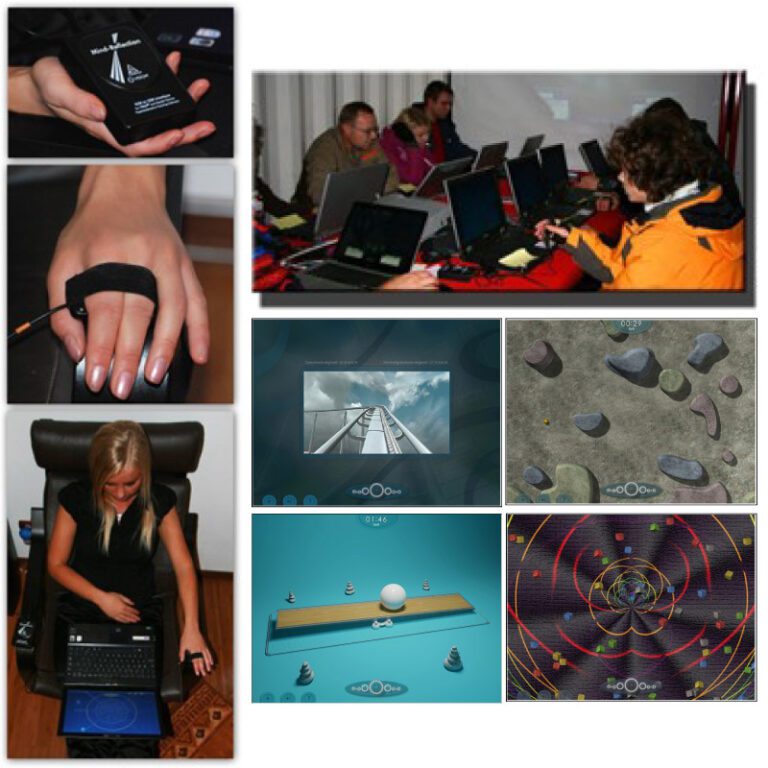
Galvanic Skin Response – Biofeedback
The skin, our largest organ, is an exceptional way of communication for mammals. Humans have been able to express emotions such as fear, disgust, desire, and rage through their skin since before the advent of language. Surprisingly, technological improvements now allow us to visually observe the phenomenon of stress in real-time. Data may be converted into interactive video games using a body computer interface that detects even minor changes in skin humidity.
Observe how it works in real time and learn to make more efficient and productive use of your energy.
Excellent for enhancing cognitive and emotional abilities in:
- Directors and executives
- Athletes
- Military
- Politicians
- Pilots
- air traffic controllers
- Artists
- University students
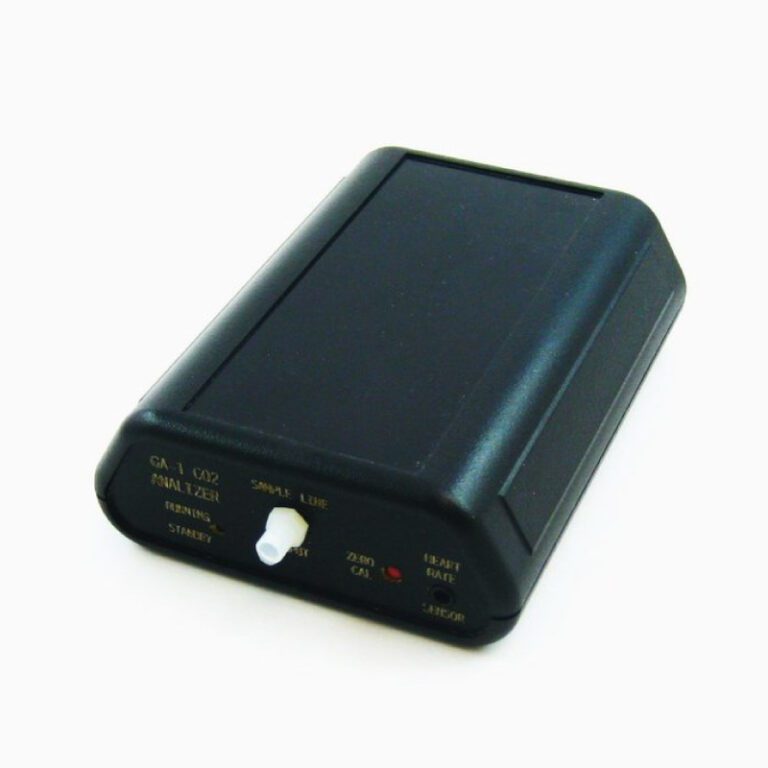
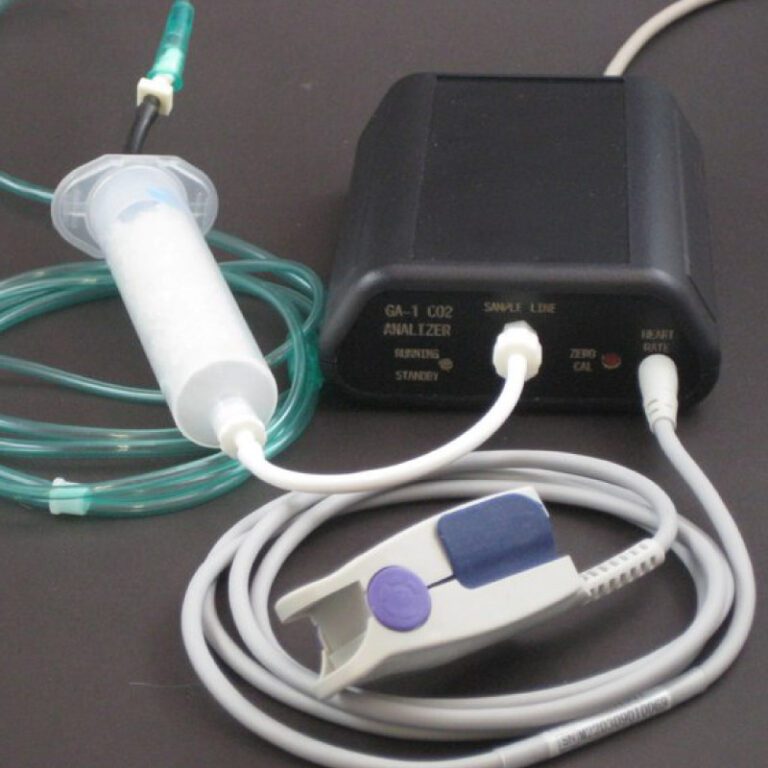
GA-1 CO2 ANALYZER
MONITORS BREATH CO2 - Now a CO2 signal can be added to the ECG-HRV, respiration belt, and EMG of other GP units. This miniature breath gas analyzer includes a PPG pulse sensor. It displays NTCO2, CO2 wave, breath rate, HR, BVP, and HRV. Software is included and it's signals can be added to other physiology signals from GP units or used alone.
THE TECHNOLOGY - Physiocom Design has designed and manufactured CO2 units for over twenty years. This fifth generation design has very stable calibration. The reading delay is small and end tidal CO2 peak is more accurate than other equipment. It comes with a water trap that is high capacity and can be renewed many times.
SOFTWARE - General purpose signal monitoring and recording applications are included. The included software is supported on Windows 10 and 11. This unit runs stand alone or with the GP-4, GP-8, or GP-12. This software was completely updated in 2023 and includes heart lung animation. The lungs change size and color with EtCO2 and the heart with HR and HRV score.
LOW COST USE - Parts that may need eventual replacement are all plug in. The battery, air pump, CO2 sensor can be replaced at low cost. The software can tell if a part needs to be replaced.

GP-12e PHYSIOAMP
MONITORS 12 CHANNELS - Four input channels are microvolt level with selectable gain and bandwidth for EMG, EEG and ECG. Four channels are temperature, respiration, or other high level sensors. Four channels are for GSR SR/SC. One channel is for PPG optical sensors to measure HR and BVP.
SOFTWARE - General purpose signal monitoring and recording applications are included. The 2023 updated software is supported on Windows 10 and 11. Third party software is available from several suppliers. We provide drivers and support for software developers. GP-12 is compatible with software developed for older I-330-C2+ devices.
NO BATTERIES - Power is supplied from USB by an isolation module. This reduces down-time and service problems. This radio frequency isolated power and data is superior to optical.
RELIABLE CABLES- Medical standard 1.5mm pin to snap leads are used for electrode connections and are available from many suppliers.
NEW TECHNOLOGY - It gives you cleaner signals, more reliability, and lower cost in a compact, rugged enclosure. New advanced chips provide 16 bit signal resolution.
COMPACT DESIGN - A general purpose physiological signal monitor in a case the size of 2 packs of playing cards. Add a small computer and you have a system in your pocket.
CONNECTION TEST - A built-in test monitors electrode connections and shows ohm values.
ADAPTABLE - A digital input connects optional accelerometer or compass modules for virtual reality applications. This input is also used for event markers from other equipment.


GP-8e+ PHYSIOAMP
MONITOR SIX CHANNELS – Two inputs channels are microvolt level with select-able gain and bandwidth for EMG or EEG or ECG. Two channels are temperature, respiration, or other high level sensors. One channel for skin resistance, One channel for PPG to measure HR and BVP.
SOFTWARE – General purpose signal monitoring and recording applications are included. The 2023 updated software is supported on Windows 10 and 11 Third party software is available from several suppliers. We provide drivers and support for software developers.
COMPACT DESIGN – A general purpose physiological signal monitor in a case the size of a pack of playing cards. Add a small computer and you have a system in your pocket.
NEW TECHNOLOGY – This gives cleaner signals, more reliability, and lower cost in a compact, rugged enclosure. The encoder provides 14 bit signal resolution.
NO BATTERIES – Power is supplied from the USB cable by a radio frequency isolation module. This provides complete electrical isolation from the computer.
CONNECTION TEST – A built-in test monitors electrode connections.
ADAPTABLE – A digital input to connect optional accelerometer or external event signals.
RELIABLE CABLES – Medical standard 1.5mm pin to snap leads are used for electrode connections and are available from many suppliers.